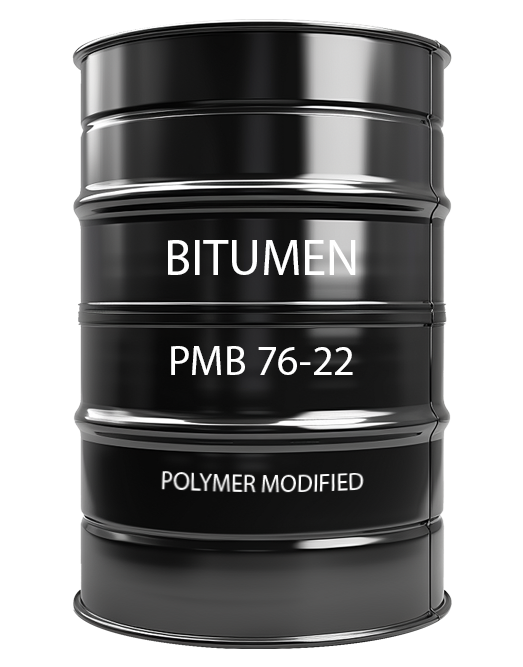
PMB 76-22
Polymer Modified Bitumen (PMB) 76-22 is a type of asphalt binder modified with polymers to enhance its performance under extreme temperature conditions and heavy traffic loads. The designation “76-22” indicates the temperature range within which this bitumen can effectively perform
- Appearance: Black solid or a viscous liquid
- Standards: IS 15462:2019
- HS Code: 27132000
Package: Bitumen are packed in
- New Steel Drums of 200Kg / 180Kg / 156Kg / Customized
- Jumbo Bags of 1Ton
- Bulk Bitumen Tank Container
Polymer Modified Bitumen PMB 76-22 – Technical Specifications
| Properties | Units | Limits | Test Methods |
|---|---|---|---|
| Softening Point, Ring & Ball | °C | Min. 75 | ASTM D36 |
| Elastic Recovery at 15°C | % | Min. 80 | ASTM D6084 |
| Flash Point Cleveland open cup | °C | Min. 230 | ASTM D92 |
| Viscosity at 150 °C | Pa.s | Max. 1.5 | ASTM D2171 |
| Complex modulus G*/Sin δ at 76°C,25mm Plate,1mm Gap, at 10rad/s | kPa | Min. 1.0 | ASTM D7175 |
| Phase Angle (δ) | degrees (°) | max. 75 | ASTM D7175 |
| Separation, Difference in Softening Point | °C | Max. 3 | – |
| FRAASS Breaking Pointa | °C | Max. -22 | EN 12593 |
| After Rolling Thin-Film Oven Test (RTFO) | ASTM D1754 | ||
|
Loss on Heating |
%Wt | Max. 1.0 | ASTM D6 |
|
Complex modulus G*/Sin δ at 76°C,25mm Plate,1mm Gap, at 10rad/s |
kPa | Min. 2.2 | ASTM D7175 |
| Multiple Stress Creep Recovery (MSCR) test | ASTM D7405 | ||
|
a) Standard Traffic (S),
Jnr 3.2, Jnr diff Max 75% at 76°C |
kPa-1 | Max. 4.5 | ASTM D7405 |
|
b) Heavy Traffic (H),
Jnr 3.2, Jnr diff Max 75% at 76°C |
kPa-1 | Max. 2.0 | ASTM D7405 |
|
C) Very Heavy Traffic (H),
Jnr 3.2, Jnr diff Max 75% at 76°C |
kPa-1 | Max. 1.0 | ASTM D7405 |
|
d) Extremely Heavy Traffic (H),
Jnr 3.2, Jnr diff Max 75% at 76°C |
kPa-1 | Max. 0.5 | ASTM D7405 |
| Pressure Aging Vessel Residue (PAV) | |||
|
Complex modulus G*/Sin δ at 31°C, 8mm Plate, 2mm Gap, at 10rad/s |
kPa | Max. 6000 | ASTM D7175 |
|
Notes |
|||
Key Characteristics of PMB 76-22
- High Temperature Performance: Designed to perform effectively at high temperatures up to 76°C without significant rutting or deformation. This makes it suitable for areas with high traffic loads or hot climates.
- Low Temperature Performance: Maintains flexibility and resists cracking down to -22°C, making it effective in regions with very cold climates.
- Polymer Modification: Often modified with styrene-butadiene-styrene (SBS) or other elastomers to improve elasticity, cohesion, and durability. T
Main Applications Of Polymer Modified Bitumen PMB 76-22
PMB 76-22 is used in situations where extreme temperature resistance, durability, and flexibility are essential:
- Highways and Expressways: Used in high-traffic highways and expressways that experience heavy and continuous traffic. PMB 76-22’s high-temperature resistance prevents rutting and deformation, ensuring road longevity and stability.
- Bridges and Overpasses: Applied on bridge decks and overpasses where temperature fluctuations and repeated loading create additional stresses. The low-temperature flexibility helps prevent cracking and the high-temperature resistance helps reduce rutting.
- Airport Runways and Taxiways: Ideal for airport pavements, where the asphalt needs to handle heavy aircraft loads and temperature extremes. PMB 76-22 provides high resistance to both rutting and cracking in aviation environments.
- Urban Roads and Industrial Zones: Suitable for urban and industrial roads with heavy vehicle loads and continuous use. PMB 76-22’s high deformation resistance and flexibility make it ideal for areas with repeated heavy traffic.
- Cold Climate Regions: Effective in regions with harsh winters, where pavements are exposed to very low temperatures. Its flexibility at -22°C prevents cracking due to thermal contraction.
PMB 76-22 is a polymer-modified bitumen designed for use in conditions that demand high resistance to extreme heat and cold. It performs well in temperatures ranging from 76°C to -22°C, making it suitable for highways, bridges, airport runways, urban roads, and regions with cold climates. Its polymer modification enhances its elasticity, durability, and resistance to deformation and cracking, ensuring long-lasting pavement stability and performance.
Various Packing Method for Polymer Modified Bitumen PMB 76-22
Packing bitumen is an essential process to ensure its safe transportation, storage, and handling. The method of packing often depends on the type of bitumen, the transportation method, and the end-use. Here are the various methods used to pack bitumen:

Drum Packing
Bitumen is commonly packed in steel drums, which are robust and provide good protection during transportation.

Jumbo Packing
Bitumen is packed in high-density polyethylene (HDPE) bags and are lined with a plastic bag to prevent leakage.
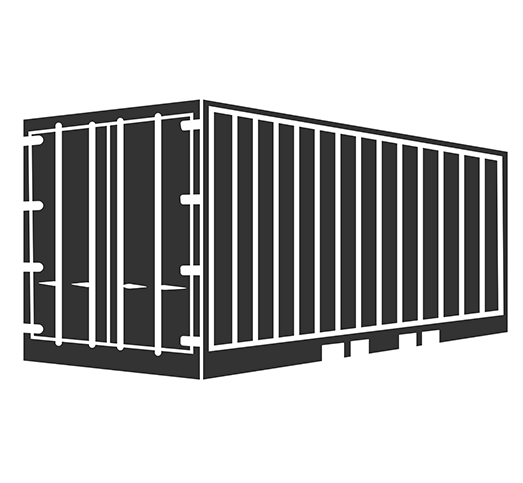
Tank Container
These are large, insulated containers used for the international transport of bitumen.
About us
We specialize in the supply of refined petroleum products, supporting infrastructure and industrial projects with reliable sourcing, competitive pricing, and flexible delivery solutions.